
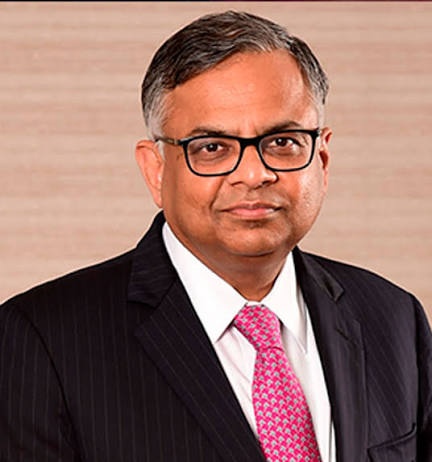
Natarajan Chandrasekaran Biography
Natarajan Chandrasekaran, widely known as N. Chandrasekaran or Chandra, is one of India’s most prominent corporate executives. He built almost his entire professional career within the Tata Group, rising from a young technology professional at Tata Consultancy Services to become its chief executive and eventually chairman of Tata Sons, the principal holding company of the Tata Group.
Born on June 2, 1963, in Tamil Nadu, Chandrasekaran joined TCS in 1987 after completing his postgraduate studies in computer applications. He spent roughly three decades with the company and became CEO and managing director in 2009. In 2017, he was appointed chairman of Tata Sons, becoming the first professional executive and first non-Parsi to lead the group.
Who Is Natarajan Chandrasekaran?
Natarajan Chandrasekaran is an Indian business executive best known for his leadership of Tata Consultancy Services (TCS) and Tata Sons.
Before becoming chairman of Tata Sons, he spent 30 years at TCS, progressing through several technology and management positions before becoming CEO and managing director. TCS says that during his leadership, the company became India’s most valuable company.
He became chairman of Tata Sons in 2017 following the removal of Cyrus Mistry. His appointment represented a major change in the Tata Group’s leadership tradition because he was a professional executive rather than a member of the Tata family or Parsi community.
Natarajan Chandrasekaran Age
Natarajan Chandrasekaran was born on June 2, 1963. He is 63 years old as of September 2026. He was born in Tamil Nadu and built his professional career largely within the Tata Group.
Early Life and Family Background
Chandrasekaran was born in a farming family in Tamil Nadu. He grew up in a rural environment before pursuing higher education and developing an interest in technology.
His early background was considerably different from the corporate world in which he would eventually work. His rise from a small-town upbringing to the leadership of one of India’s largest business groups has become an important part of his professional biography.
He has generally maintained a relatively private family life while keeping his public profile focused on business and corporate leadership.
Education
Chandrasekaran studied Applied Sciences at the undergraduate level before pursuing a Master of Computer Applications (MCA) at the Regional Engineering College in Tiruchirappalli, now known as the National Institute of Technology, Tiruchirappalli.
His computer education became the foundation for his career in information technology. After completing his studies, he joined Tata Consultancy Services in 1987.
Joining Tata Consultancy Services
Chandrasekaran joined TCS in 1987, beginning a career that would eventually span approximately three decades within the company.
He worked through different technology and management positions, gaining experience in software development, information technology services, international business and corporate management.
Rather than entering the Tata Group at the top, he gradually progressed through the organization. This career path earned him the description of a “Tata lifer” in several profiles of his career.
Becoming CEO of TCS
In 2009, Chandrasekaran became CEO and managing director of Tata Consultancy Services.
At the time, TCS was already one of India’s largest technology companies, but his tenure coincided with a period of major expansion in global technology services.
He focused on strengthening the company’s international operations, digital capabilities and relationships with major global businesses.
TCS credits his leadership with helping the company become India’s most valuable company during his tenure as CEO.
Rise to Tata Sons Chairman
Chandrasekaran joined the board of Tata Sons in October 2016. A few months later, in January 2017, he was appointed chairman of Tata Sons, formally taking charge in February.
His appointment followed a turbulent period within the Tata Group after Cyrus Mistry was removed as chairman.
Chandrasekaran inherited a group containing businesses across technology, automobiles, steel, hotels, consumer products, telecommunications and other industries.
The First Non-Parsi Professional Chairman
One of the most notable aspects of Chandrasekaran’s appointment was his background.
He became the first non-Parsi and professional executive to lead the Tata Group. His appointment demonstrated the increasingly professionalized management structure of the conglomerate.
His career also represented a progression within the Tata system rather than an appointment from outside the group.
Chandrasekaran’s Tata Group Strategy
During his tenure, Chandrasekaran pursued a strategy that sought to make the sprawling Tata businesses more coordinated and focused.
The group increased its attention on areas such as:
- Digital businesses
- Electric vehicles
- Semiconductors
- Electronics manufacturing
- Batteries
- Aviation
- Consumer businesses
- New technology
Under his leadership, the Tata Group also moved more aggressively into areas connected to India’s technology and manufacturing ambitions. Contemporary assessments of his tenure have highlighted the group’s expansion into semiconductors, electronics, batteries and aviation.
Air India and the Tata Group
One of Chandrasekaran’s most visible strategic decisions was Tata’s return to the airline business.
The Tata Group completed its acquisition of Air India from the Indian government in January 2022. Chandrasekaran subsequently became chairman of Air India.
The acquisition represented the return of the airline to the Tata Group decades after the government nationalized it.
The group later pursued the consolidation of its aviation interests, including Air India and Vistara, as part of a broader strategy for building a larger airline operation.
Tata’s Semiconductor Ambitions
Another major part of Chandrasekaran’s later strategy has been Tata’s move into semiconductor manufacturing and electronics.
The group announced major investments in semiconductor manufacturing, including a semiconductor fabrication plant in Gujarat and an assembly and testing facility in Assam.
These initiatives marked a significant expansion beyond Tata’s traditional businesses and into strategic technology manufacturing.
The move has been described as part of the group’s effort to participate more deeply in India’s electronics and semiconductor ecosystem.
Tata and Electric Vehicles
Chandrasekaran also oversaw a major push into electric mobility through Tata Motors.
The company expanded its electric vehicle portfolio in India and invested in battery and related technologies.
Tata Motors’ electric vehicle strategy became one of the most visible parts of the group’s broader transition toward newer technology-driven industries. Contemporary assessments of Chandrasekaran’s tenure specifically identify Tata Motors’ EV push as one of the major developments during his chairmanship.
Relationship With Ratan Tata
Chandrasekaran worked closely with Ratan Tata, the former chairman emeritus of Tata Sons.
Ratan Tata supported Chandrasekaran’s elevation to the chairmanship in 2017, and their professional relationship became an important part of the group’s leadership story.
Following Ratan Tata’s death in October 2024, Chandrasekaran continued to lead Tata Sons while the group navigated a new phase of leadership and governance.
Several 2026 profiles of Chandrasekaran describe his period as chairman as a major transformation of the Tata Group’s business portfolio.
Natarajan Chandrasekaran and Tata Trusts
Tata Sons has a distinctive ownership structure in which Tata Trusts hold a controlling stake.
In 2026, relations between the Tata Sons board and Tata Trusts became a major corporate governance issue.
The situation intensified after Chandrasekaran announced on August 12, 2026, that he would not seek another term when his then-current tenure was scheduled to end on February 20, 2027.
However, events changed dramatically in September.
Natarajan Chandrasekaran Reappointed in September 2026
On September 17, 2026, Tata Sons’ board approved a new five-year term for Chandrasekaran as executive chairman.
This reversed his earlier decision not to seek another term. Reuters reported that the board also advanced plans related to a potential Tata Sons public listing.
The decision has created a significant governance dispute with Tata Trusts chairman Noel Tata, who opposed the reappointment and the proposed listing.
Noel Tata has argued that the decision did not comply with Tata Sons’ Articles of Association and that the Trusts had not given the required support. The dispute remains contested, and reports indicate that the validity of the board’s decisions could face further legal scrutiny.
It is therefore important to distinguish between the board’s decision to reappoint Chandrasekaran and the unresolved disagreement over whether that decision was properly authorized.
Tata Sons IPO Debate
The September 2026 board decision also advanced plans for a possible Tata Sons initial public offering.
Tata Sons has been classified by the Reserve Bank of India as an upper-layer non-banking financial company, creating regulatory considerations around listing.
The potential listing has become controversial because Tata Trusts has expressed opposition to the move. The Trusts’ position, as reported by the Indian Express, is that listing Tata Sons could affect the distinctive structure and character of the Tata Group.
The IPO remains a developing corporate governance and regulatory story rather than a completed public listing.
Natarajan Chandrasekaran’s Leadership Style
Chandrasekaran has generally been described as a technology-focused and data-oriented corporate executive.
His career reflects a combination of technical education, long-term corporate experience and management responsibility.
He has also been associated with running and marathon participation. Profiles of him have noted his interest in long-distance running and his participation in major marathons.
Natarajan Chandrasekaran’s Family
Chandrasekaran is married to Lalitha Chandrasekaran.
The couple has maintained a relatively private family life, with Chandrasekaran generally keeping his public attention on corporate affairs.
Unlike many highly publicized business figures, he has not built his public identity around his personal life. Most reliable profiles therefore focus substantially more on his professional journey than on his family.
Awards and Recognition
Chandrasekaran has received numerous awards and professional recognitions during his career.
His recognition has included honors for corporate leadership, technology and business management. During his time as TCS chief executive, he was repeatedly recognized by institutional investor surveys and other business organizations.
His appointment as Tata Sons chairman in 2017 represented the highest corporate position of his career and placed him at the head of one of India’s largest conglomerates.
Natarajan Chandrasekaran’s Books
Chandrasekaran has also written about leadership and business.
He co-authored Bridgital Nation with Roopa Purushothaman. The book discusses how technology and digital systems could help address challenges in areas such as healthcare, education and employment.
His interest in technology has therefore extended beyond corporate management into discussions about India’s broader economic and social development.
Natarajan Chandrasekaran’s Legacy
Chandrasekaran’s tenure at Tata Sons has included significant changes to the group’s business portfolio.
The group expanded its presence in aviation, electric vehicles, semiconductors, electronics and digital businesses while continuing to operate established companies such as TCS, Tata Motors and Tata Steel.
At the same time, his leadership has faced difficult issues, including Air India’s financial performance, the challenges at Jaguar Land Rover and disagreements concerning the future governance and ownership structure of Tata Sons. Contemporary assessments of his tenure have therefore highlighted both major strategic expansion and significant challenges.
Natarajan Chandrasekaran in 2026
September 2026 has become one of the most consequential periods of Chandrasekaran’s corporate career.
After announcing in August that he would not seek another term, he was reappointed by the Tata Sons board on September 17 for another five years. At the same time, the board moved forward with plans related to a potential Tata Sons listing.
Tata Trusts, led by Noel Tata, has opposed both developments, creating an unresolved governance dispute.
As of September 17, 2026, Chandrasekaran therefore remains the executive chairman of Tata Sons, while the disagreement surrounding his reappointment and the potential listing continues to develop.
1. Who is Natarajan Chandrasekaran?
Natarajan Chandrasekaran is an Indian business executive and the executive chairman of Tata Sons, the principal holding company of the Tata Group. He previously served as CEO and managing director of Tata Consultancy Services.
2. How old is Natarajan Chandrasekaran?
Natarajan Chandrasekaran was born on June 2, 1963, making him 63 years old in September 2026.
3. What is Natarajan Chandrasekaran’s educational qualification?
He studied Applied Sciences and later earned a Master of Computer Applications (MCA) from the Regional Engineering College in Tiruchirappalli, now NIT Tiruchirappalli.
4. When did Natarajan Chandrasekaran become chairman of Tata Sons?
Chandrasekaran was appointed chairman of Tata Sons in January 2017 and formally took charge in February 2017. He had joined the Tata Sons board in October 2016.
5. Is Natarajan Chandrasekaran still Tata Sons chairman?
Yes. As of September 17, 2026, the Tata Sons board has approved a new five-year term for Chandrasekaran as executive chairman. The decision followed his August announcement that he would not seek another term and has been opposed by Tata Trusts chairman Noel Tata. The governance dispute is still developing.


