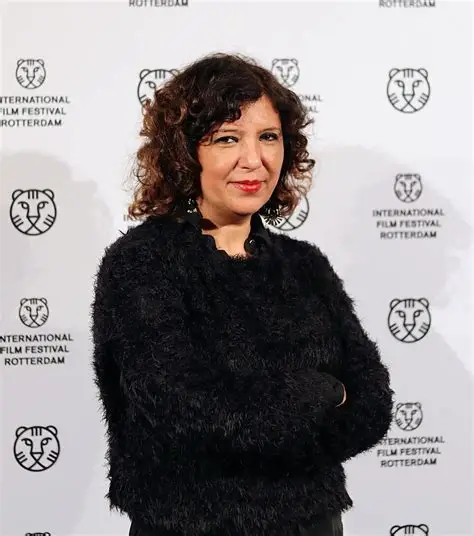
Kaouther Ben Hania is a Tunisian filmmaker whose work has brought international attention to stories about political injustice, gender, displacement and human suffering. Through films such as Beauty and the Dogs, The Man Who Sold His Skin, Four Daughters and The Voice of Hind Rajab, she has developed a distinctive filmmaking approach that combines documentary evidence with fictional storytelling.
Her international recognition has grown through major film festival awards and three Academy Award-nominated productions. In 2026, she reached another milestone when she joined the jury of the 23rd Marrakech International Film Festival, chaired by French actress Marion Cotillard.
Ben Hania’s career reflects the growing influence of African and Arab filmmakers in international cinema. Rather than relying on conventional storytelling, she uses innovative film techniques to examine real experiences and challenge audiences to consider the human consequences of political and social decisions.
Early Life and Education
Kaouther Ben Hania was born on August 27, 1977, in Sidi Bouzid, a town in central Tunisia. She grew up in a country whose social and political realities would later influence many of her films. Her interest in storytelling eventually led her towards cinema, although her first academic direction was business studies.
She initially studied commerce before joining the École des Arts et du Cinéma de Tunis, where she received formal film education between 2002 and 2004. During this period, she began making short films and developed an interest in the relationship between documentary evidence and fictional storytelling.
Ben Hania continued her training in France. She studied screenwriting at La Fémis in Paris and completed a research master’s degree in film and audiovisual studies at Sorbonne Nouvelle University. Her academic work explored the boundaries between documentary and fiction, a question that would become central to her filmmaking style.
Her education gave her both practical filmmaking skills and a framework for examining how cinema represents real people, social structures and political events.
Career Beginnings and First Films
Ben Hania began directing short films while studying in Tunisia. Her early works included La Brèche (2004), Me, My Sister and the Thing (2006) and Wooden Hand (2013). These projects helped her develop a distinctive approach to character, observation and social commentary.
She also gained experience in documentary production. Her film Imams Go to School premiered at the International Documentary Film Festival Amsterdam in 2010. The project examined religious education and strengthened her interest in subjects that connect individual lives with wider institutions.
After her film studies, she joined the founding team of Al Jazeera Documentary Channel, where she worked until 2007. The experience exposed her to documentary production and strengthened her understanding of how filmmakers can build narratives from real events and testimony.
Her first feature film, Challat of Tunis, marked an important step towards international recognition. The 2013 production, also known as The Blade of Tunis, grew from a strange story circulating in Tunisia about a man who allegedly attacked women wearing short skirts. Ben Hania used a mixture of documentary and fictional techniques to investigate the story and examine the treatment of women in Tunisian society.
The film screened at Cannes in 2014 through the ACID programme and received awards at other international festivals. It established her as a filmmaker willing to challenge social conventions through unconventional storytelling.
Breakthrough with Beauty and the Dogs
Ben Hania strengthened her international profile with Beauty and the Dogs (2017), a drama inspired by the real experience of a young Tunisian woman who faced sexual violence and institutional mistreatment.
The film follows Mariam, a university student who encounters a series of obstacles while trying to report a sexual assault. Rather than focusing only on the original crime, Ben Hania examines the institutions and attitudes that make it difficult for victims to obtain justice.
The director used long takes and a tense, almost real-time structure to place viewers close to Mariam’s experience. The approach created a feeling of immediacy while keeping attention on the character’s struggle.
Beauty and the Dogs screened in the Un Certain Regard section at the 2017 Cannes Film Festival. Its international reception brought further attention to Ben Hania’s interest in women’s rights, institutional power and the consequences of social silence.
The film also helped define her approach to politically engaged cinema. She does not always present political arguments through speeches or conventional exposition. Instead, she builds stories around people facing systems that restrict their choices.
The Man Who Sold His Skin and International Recognition
In 2020, Ben Hania released The Man Who Sold His Skin, a drama that expanded her international reputation. The film follows Sam Ali, a Syrian refugee who agrees to have a work of art tattooed onto his back. The decision gives him an opportunity to travel to Europe but turns his body into an object within the international art market.
The story examines displacement, freedom, exploitation and the commercial value assigned to human beings. Ben Hania uses the unusual premise to explore the experience of refugees and the unequal power relationships that shape their lives.
The film premiered in the Orizzonti section of the 2020 Venice Film Festival. Actor Yahya Mahayni won the section’s Best Actor award for his performance, while the film later received an Academy Award nomination for Best International Feature Film at the 93rd Oscars. It became the first Tunisian film to receive an Oscar nomination in that category.
The nomination represented a major milestone for Tunisian cinema and placed Ben Hania among the North African filmmakers attracting sustained international attention.
Four Daughters and a New Documentary Approach
Ben Hania reached another career milestone with Four Daughters (2023), an experimental documentary that examines the life of Olfa Hamrouni and her four daughters.
The story centres on the disappearance of Olfa’s two older daughters, who left Tunisia to join the Islamic State. Rather than relying exclusively on conventional interviews or archival footage, Ben Hania combines documentary testimony with dramatic reenactments. Professional actresses portray members of the family, while the real Olfa and her remaining daughters also participate.
This structure allows the film to explore memory, family relationships, trauma and the conditions that shaped the daughters’ decisions. It also raises questions about how people remember difficult experiences and how cinema can represent events that remain emotionally complicated.
Four Daughters premiered in competition at the 2023 Cannes Film Festival, where it won the L’Œil d’or award for best documentary. The film later received an Academy Award nomination for Best Documentary Feature at the 96th Oscars in 2024. It also won the César Award for Best Documentary in 2024.
The film demonstrated that Ben Hania could use documentary and fiction together without treating either form as a simple substitute for the other. Her method gave the family room to revisit painful experiences while allowing the film to examine the broader social forces behind them.
The Voice of Hind Rajab and Her Most Recent Recognition
Ben Hania’s international profile grew further with The Voice of Hind Rajab (2025), a film based on the final hours of five-year-old Palestinian girl Hind Rajab, who was killed in Gaza in January 2024.
Hind had been travelling with members of her family when their vehicle came under fire. Trapped in the wreckage, she contacted the Palestinian Red Crescent and pleaded for help. The recordings of her calls became central to Ben Hania’s decision to make the film.
Instead of recreating the events through conventional dramatic scenes alone, the director used Hind’s actual recorded voice alongside performances by actors portraying the emergency call handlers who tried to arrange her rescue. This approach connected documentary evidence with dramatic reconstruction, creating a film centred on the human consequences of war.
Ben Hania has explained that hearing Hind’s voice affected her deeply. At the time, she was promoting Four Daughters during its awards campaign. She decided to put aside another planned project and focus on telling Hind’s story.
The film premiered at the 2025 Venice International Film Festival, where it received the Silver Lion Grand Jury Prize. Its reception brought renewed international attention to Ben Hania’s work and her commitment to stories about people whose experiences are often overlooked.
The Voice of Hind Rajab subsequently received major awards recognition, including nominations for the 2026 Academy Award for Best International Feature Film and the 2026 BAFTA Award for Best Film Not in the English Language.
The film’s success also reinforced her reputation for combining real testimony, dramatic performance and political urgency.
Kaouther Ben Hania at the 2026 Marrakech International Film Festival
Ben Hania is serving on the jury of the 23rd Marrakech International Film Festival, taking place from November 20 to 28, 2026, in Morocco.
The jury is chaired by French actress Marion Cotillard. Its members include Danish actor Claes Bang, Luxembourgish actress Vicky Krieps, French-British actress Emma Mackey, French actor and filmmaker Gilles Lellouche, British director Andrew Haigh, Franco-Senegalese filmmaker Ramata-Toulaye Sy and Moroccan filmmaker Saïd Hamich Benlarbi.
Ben Hania represents Tunisia among the nine jury members. The panel will assess 14 films competing for the festival’s Golden Star, with the awards scheduled for the closing ceremony on November 28.
Her appointment reflects the international standing she has developed through films that have travelled across major festivals and received recognition from the Academy Awards, Cannes and Venice.
Filmmaking Style and Political Themes
Ben Hania’s work stands out for its movement between documentary and fiction. She does not treat these forms as completely separate approaches. Instead, she chooses the method that best communicates the experience at the centre of each story.
Challat of Tunis uses investigative elements and fictional construction to examine violence against women. Beauty and the Dogs turns a real social problem into a tense dramatic narrative. Four Daughters combines real family testimony with professional performances, while The Voice of Hind Rajab uses authentic audio recordings within a dramatic reconstruction.
Her films frequently examine power, gender, displacement, violence and the relationship between individuals and institutions. Women often occupy the centre of her stories, particularly when social expectations or institutional systems limit their freedom.
She also pays close attention to the ethics of representation. Her films raise questions about who gets to tell a story, how filmmakers should portray suffering and what responsibility cinema carries when it deals with real people.
This approach gives her work a recognisable identity without forcing every film into the same structure. She changes her techniques according to the subject, allowing the story to determine the form.
Personal Life
Kaouther Ben Hania maintains a relatively private personal life. She has built her public identity around filmmaking, screenwriting and her views on cinema rather than sharing extensive details about her family or romantic relationships.
She has professional and personal ties to both Tunisia and France. Her education and early career took her from Tunis to Paris, while her films remain closely connected to Tunisian society and wider questions affecting the Arab world.
Her international career has also brought her into contact with filmmakers, actors and producers across Europe, North Africa and other film industries. However, she generally keeps attention on the people and issues represented in her work.
Awards and Major Achievements
Ben Hania’s career includes major festival selections, international awards and Academy Award nominations. Her achievements include:
-
Academy Award nomination, 2021: The Man Who Sold His Skin received a nomination for Best International Feature Film.
-
Academy Award nomination, 2024: Four Daughters received a nomination for Best Documentary Feature.
-
Academy Award nomination, 2026: The Voice of Hind Rajab received a nomination for Best International Feature Film.
-
Cannes Film Festival, 2023: Four Daughters won the L’Œil d’or award for best documentary.
-
Venice Film Festival, 2025: The Voice of Hind Rajab won the Silver Lion Grand Jury Prize.
-
César Awards, 2024: Four Daughters won Best Documentary.
-
Venice Film Festival, 2020: Yahya Mahayni won Best Actor in the Orizzonti section for The Man Who Sold His Skin.
These achievements have made her one of the most internationally recognised contemporary filmmakers from Tunisia.
Net Worth and Sources of Income
Kaouther Ben Hania’s net worth has not been reliably established through public financial disclosures. There is no dependable basis for assigning her a specific personal fortune.
Her professional income comes primarily from filmmaking. Directing, screenwriting and producing feature films and documentaries form the core of her career. She has also worked in television and documentary production.
International film projects can involve different financing arrangements, production companies, grants and distribution agreements. However, the budgets and commercial performance of her films do not establish her personal earnings. Any precise net worth figure circulating online should therefore be treated cautiously.
Frequently Asked Questions
Who is Kaouther Ben Hania?
Kaouther Ben Hania is a Tunisian film director and screenwriter known for combining documentary and fictional storytelling in films such as Four Daughters and The Voice of Hind Rajab.
How old is Kaouther Ben Hania?
She is 49 years old as of November 2026. She was born on August 27, 1977, in Sidi Bouzid, Tunisia.
Where is Kaouther Ben Hania from?
She is from Sidi Bouzid in central Tunisia. She later studied cinema in Tunis and continued her education in Paris.
Which films made Kaouther Ben Hania famous?
Her best-known films include Beauty and the Dogs, The Man Who Sold His Skin, Four Daughters and The Voice of Hind Rajab.
Has Kaouther Ben Hania won an Oscar?
She has received Academy Award nominations but has not won an Oscar. Her films The Man Who Sold His Skin, Four Daughters and The Voice of Hind Rajab received nominations in different categories.
What is The Voice of Hind Rajab about?
The film reconstructs the final hours of Palestinian child Hind Rajab, using her actual emergency phone recordings and actors portraying the Palestinian Red Crescent staff who tried to arrange her rescue.
Is Kaouther Ben Hania on the 2026 Marrakech Film Festival jury?
Yes. She is one of nine jury members at the 23rd Marrakech International Film Festival, chaired by Marion Cotillard, running from November 20 to 28, 2026.
What is Kaouther Ben Hania’s filmmaking style?
She combines documentary evidence, fictional storytelling and dramatic reenactment. Her films frequently examine social injustice, women’s experiences, political power and human rights.
Conclusion
Kaouther Ben Hania has built an international filmmaking career by developing a distinctive relationship between reality and fiction. From Challat of Tunis to Four Daughters and The Voice of Hind Rajab, she has used cinema to examine difficult subjects while keeping individual human experiences at the centre of her stories.
Her three Academy Award-nominated films and major festival recognition have strengthened her position in international cinema. Her appointment to the 2026 Marrakech International Film Festival jury adds another milestone to a career that continues to bring Tunisian and wider Arab perspectives to global audiences.