
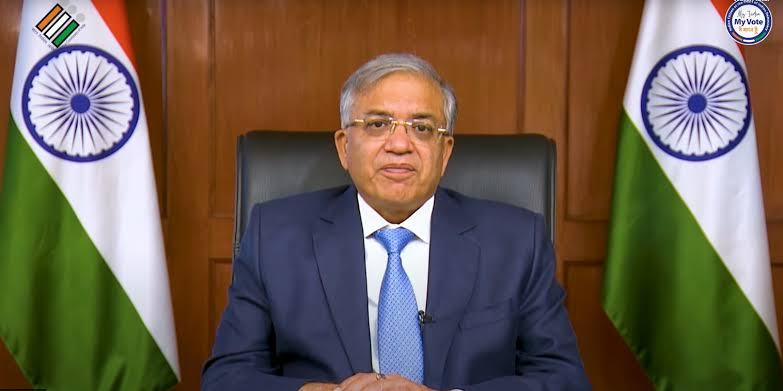
Gyanesh Kumar Biography
Gyanesh Kumar is an Indian civil servant and the 26th Chief Election Commissioner of India. A 1988-batch Indian Administrative Service officer of the Kerala cadre, he spent more than three decades in government administration before joining the Election Commission of India in March 2024. He became Chief Election Commissioner on February 19, 2025, succeeding Rajiv Kumar. The Election Commission’s current officers directory lists him as the serving CEC.
Before taking charge of India’s election machinery, Kumar held senior positions in both the Kerala government and the Government of India. His career included assignments in public works, finance, food and civil supplies, defence, home affairs, parliamentary affairs and cooperation. His work in the Union Home Ministry also placed him in the administration of Jammu and Kashmir during the period surrounding the government’s 2019 decision concerning Article 370.
Gyanesh Kumar Early Life and Background
Gyanesh Kumar was born in Uttar Pradesh and belongs to the 1988 batch of the Indian Administrative Service. He was allocated to the Kerala cadre and spent a substantial part of his administrative career working in the state.
Unlike elected politicians, Kumar’s career developed through the civil-service system. His assignments have taken him through district administration, state-level departments and senior positions in the Union government.
His professional background later became particularly relevant when he joined the Election Commission. By the time he became CEC, he had experience managing government departments and large administrative programmes at both state and national levels.
Gyanesh Kumar Education
Kumar studied Civil Engineering at the Indian Institute of Technology Kanpur, where he obtained his B.Tech degree. IIT Kanpur’s profile also records his studies in Business Finance at ICFAI and Environmental Economics at Harvard University in the United States.
His education in engineering was followed by a career that moved well beyond technical administration. Over the years, he worked in areas including infrastructure, finance, public administration, national security-related administration and institutional reform.
Gyanesh Kumar IAS Career
Kumar entered the Indian Administrative Service in 1988 as a member of the Kerala cadre.
During his Kerala posting, he served in several important administrative positions. These included District Collector of Ernakulam, Municipal Commissioner of Cochin and Managing Director of the Kerala State Cooperative Bank. He also served as Secretary of the Goshree Islands Development Authority and Managing Director of the Trivandrum Airport Development Society.
His state-government responsibilities covered departments including finance resources, fast-track projects, public works, modernising government programmes, and food, civil supplies and consumer affairs.
The variety of these assignments gave him experience in areas ranging from infrastructure and urban administration to public distribution and government reform.
Gyanesh Kumar in the Government of India
Kumar later moved into senior positions within the Union government.
He served as Joint Secretary in the Ministry of Defence, where he was involved in the administration of India’s defence shipyards. He subsequently worked in the Ministry of Home Affairs as Joint Secretary and Additional Secretary.
His period in the Home Ministry coincided with major developments involving Jammu and Kashmir and Ayodhya. His role during this period has subsequently attracted considerable attention because of the importance of the policies being administered by the ministry at the time. Contemporary profiles identify him as part of the administrative team involved in implementing government decisions concerning Jammu and Kashmir following the 2019 changes relating to Article 370.
Kumar later became Secretary in the Ministry of Parliamentary Affairs and then Secretary in the Ministry of Cooperation.
Gyanesh Kumar Joins the Election Commission
Kumar retired from regular government service on January 31, 2024. He was appointed an Election Commissioner of India on March 15, 2024.
As an Election Commissioner, he was involved in the administration of the 2024 Lok Sabha election and elections to several state and Union Territory legislatures.
The Election Commission later announced that he would become Chief Election Commissioner following the completion of Rajiv Kumar’s tenure.
Gyanesh Kumar Becomes Chief Election Commissioner
Gyanesh Kumar assumed office as India’s 26th Chief Election Commissioner on February 19, 2025. The Election Commission confirmed his assumption of office in an official press note issued the same day.
In his message after taking charge, Kumar emphasised the importance of voting and encouraged citizens who had reached the age of 18 to register as electors and participate in elections. The ECI said he stressed that the Commission’s constitutional responsibility is centred on voters and the electoral process.
His appointment was the first CEC appointment made under India’s newer legal framework for the selection of election commissioners. The appointment process attracted political debate, with opposition leaders raising concerns about the composition of the selection panel. Those objections were political positions expressed at the time of the appointment and do not by themselves establish wrongdoing by Kumar.
Gyanesh Kumar and the 2026 Elections
The year 2026 has been a particularly significant period in Kumar’s tenure because the Election Commission has overseen Assembly elections in several major states.
Under his leadership, the Commission administered the 2026 elections in Tamil Nadu and West Bengal, among other electoral exercises.
In Tamil Nadu, Kumar commented on the exceptionally high turnout recorded during the April 2026 Assembly election. Election authorities reported turnout above 84 percent.
The Commission also conducted preparations for elections in West Bengal, where electoral-roll revision became one of the most politically contentious issues of the year.
Gyanesh Kumar and Electoral Roll Revision
One of the defining issues surrounding Kumar’s 2026 tenure has been the Special Intensive Revision, or SIR, of electoral rolls.
The Election Commission has described electoral-roll accuracy as a fundamental part of conducting elections. At a national conference of the ECI and State Election Commissioners in February 2026, Kumar chaired discussions on electoral-roll management and the conduct of elections. The participating State Election Commissioners adopted the National Declaration 2026, which identified accurate electoral rolls as an important foundation for elections.
The SIR process has also generated strong criticism from opposition parties, particularly in West Bengal. Leaders including Mamata Banerjee, Rahul Gandhi and other opposition politicians have questioned aspects of the exercise and raised allegations concerning voter deletions and the Commission’s handling of complaints.
Those allegations remain contested political claims. The Election Commission’s stated position has focused on electoral-roll verification and ensuring that eligible voters are properly included.
Political Controversies Surrounding Gyanesh Kumar
Kumar’s tenure as CEC has attracted unusually intense political debate.
Opposition parties have criticised the Commission’s handling of electoral-roll revision and certain administrative decisions made ahead of the 2026 state elections. In March 2026, reports also described preparations by opposition MPs for a motion seeking Kumar’s removal, with allegations including partisan conduct and problems connected with the electoral-roll revision process. These were allegations contained in a political removal motion, not findings that Kumar had been found guilty of those accusations.
Several political groups have also questioned his previous government service, particularly his role in the Home Ministry during the implementation of major Jammu and Kashmir policy decisions.
At the same time, the Election Commission and government representatives have maintained that the Commission operates within its constitutional and statutory responsibilities.
For a factual biography, these disputes are best understood as part of the political debate surrounding the institution rather than as established conclusions about Kumar’s personal conduct.
Gyanesh Kumar and International IDEA
Kumar also took on an international electoral-governance responsibility during 2026.
In December 2025, he assumed the chairship of the Council of Member States of International IDEA for the 2026 term. The Press Information Bureau reported that India’s chairship would focus on democratic participation, future-oriented democratic institutions and independent professional election-management bodies.
The position gave Kumar a role in international discussions about electoral administration and democratic institutions beyond India’s domestic election system.
Gyanesh Kumar’s Distinguished Alumni Award
In 2025, IIT Kanpur conferred its Distinguished Alumni Award on Kumar. The institution cited his contributions in transformational policy, administrative expertise and electoral governance.
The recognition came after he had moved from a long civil-service career into election administration.
Gyanesh Kumar Tenure as CEC
Kumar’s appointment as Chief Election Commissioner is expected to run until January 2029 under the current tenure arrangements. His term therefore covers an important period in India’s electoral calendar, including the lead-up to the next general election.
As CEC, his responsibilities include leading the Election Commission in the administration and supervision of elections, electoral-roll management and other constitutional functions assigned to the Commission.
Gyanesh Kumar Personal Life
Reliable public information about Kumar’s private life is limited compared with information about his professional career. Public profiles focus primarily on his education, civil-service appointments and work within the Election Commission.
His public career has largely been defined by administrative responsibilities rather than electoral politics. Unlike elected representatives, his advancement through government came through the Indian Administrative Service and senior bureaucratic appointments.
Gyanesh Kumar Current Role in 2026
As of September 2026, Gyanesh Kumar is serving as the Chief Election Commissioner of India. He heads the Election Commission alongside Election Commissioners Sukhbir Singh Sandhu and Vivek Joshi, according to the Commission’s current officers directory.
His 2026 tenure has included major state elections, electoral-roll revision, institutional conferences and continuing debate over the role and independence of the Election Commission.
From a career in the Indian Administrative Service to senior Union government positions and finally the country’s highest election-management office, Gyanesh Kumar’s professional journey has been built almost entirely within public administration. His current position places him at the centre of India’s electoral system during a period of substantial political and institutional debate.
Gyanesh Kumar Biography FAQs
1. Who is Gyanesh Kumar?
Gyanesh Kumar is an Indian Administrative Service officer and the 26th Chief Election Commissioner of India. He assumed office on February 19, 2025, after serving as an Election Commissioner from March 2024.
2. What is Gyanesh Kumar’s educational qualification?
He holds a B.Tech in Civil Engineering from IIT Kanpur. He has also studied Business Finance at ICFAI and Environmental Economics at Harvard University.
3. Which IAS batch does Gyanesh Kumar belong to?
Gyanesh Kumar belongs to the 1988 batch of the Indian Administrative Service and was allotted the Kerala cadre.
4. What positions did Gyanesh Kumar hold before becoming CEC?
Before joining the Election Commission, he served in several senior positions, including District Collector of Ernakulam, Municipal Commissioner of Cochin, Joint Secretary and Additional Secretary in the Ministry of Home Affairs, Secretary in the Ministry of Parliamentary Affairs and Secretary in the Ministry of Cooperation.
5. When did Gyanesh Kumar become Chief Election Commissioner?
Gyanesh Kumar became the 26th Chief Election Commissioner of India on February 19, 2025. The Election Commission formally announced his assumption of office on that date.


