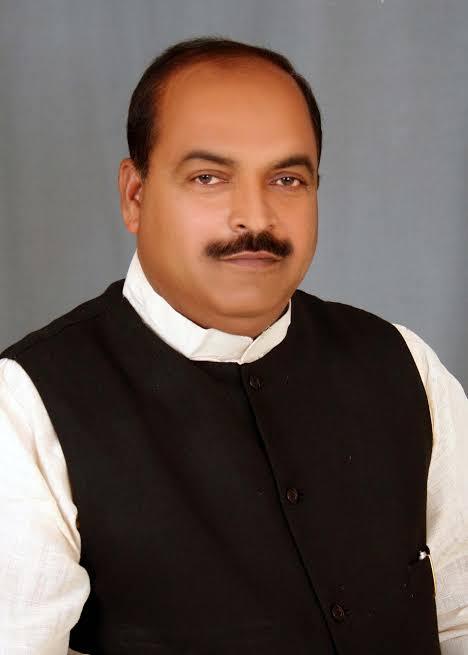
Dhruv Kumar Tripathi Biography
Dhruv Kumar Tripathi is an Indian teacher, education-sector representative and politician from Uttar Pradesh, known for his long involvement in teachers’ organisations and his service as a member of the Uttar Pradesh Legislative Council. His public career developed through the teachers’ movement, where he represented the professional concerns of educators and worked within the state’s legislative system.
Tripathi became widely recognised in Uttar Pradesh after winning election to the Legislative Council from the Gorakhpur-Faizabad Teachers’ Constituency. He won the seat in 2008 and secured re-election in 2014 and 2020, building a record of three consecutive terms as a teachers’ representative. His career has largely centred on education, teachers’ rights and the representation of schoolteachers in state politics.
In September 2026, the Bharatiya Janata Party announced him as its candidate for the Gorakhpur-Faizabad teachers’ constituency in the upcoming election, marking a significant development in his political career. His long experience in teachers’ organisations remains a defining part of his public profile.
Early Life and Family Background
Dhruv Kumar Tripathi was born on 15 October 1959 in Belhara village, in the Siddharthnagar district of Uttar Pradesh, India. He grew up in a rural environment and came from a farming family. His early experiences in this setting preceded a career that would eventually bring him into education, teachers’ organisations and state-level politics.
His parents were Suresh Tripathi and Ajora Devi. Although public information about his childhood is limited, his later professional life shows a sustained connection with the educational community in eastern Uttar Pradesh. Siddharthnagar and the surrounding region remained central to his teaching and organisational activities.
Tripathi’s public identity developed primarily through his work rather than through a political family background. He established himself as a teacher before becoming a recognised representative of educators in Uttar Pradesh.
Education and Academic Qualifications
Tripathi pursued higher education at Gorakhpur University, now known as Deen Dayal Upadhyaya Gorakhpur University. His academic qualifications include a Bachelor of Education degree and a postgraduate degree in sociology.
His educational background provided preparation for a career in teaching. He entered the profession at a time when teachers’ organisations played an important role in representing educators on issues involving employment conditions, professional responsibilities and the administration of schools.
Rather than moving directly into electoral politics, Tripathi built his public standing through teaching and participation in teachers’ associations. This experience later became an important part of his political identity.
Beginning of His Teaching Career
Tripathi began working as a teacher at Baba Haridas Inter College in Uska Bazar, Siddharthnagar, on 23 October 1982. He served as an assistant teacher, beginning a professional career that placed him in direct contact with students, fellow educators and the everyday concerns of school administration.
Teaching became the foundation of his public service. His work in education exposed him to the practical issues teachers faced, including professional recognition, working conditions and their relationship with government authorities.
During this period, he also became involved in organised efforts to represent teachers. His participation in the Uttar Pradesh Madhyamik Shikshak Sangh, an organisation associated with secondary-school teachers, helped him develop experience in collective representation and organisational leadership.
Tripathi’s early career therefore combined classroom teaching with growing involvement in professional advocacy. This combination would later distinguish him from politicians whose careers began entirely within party structures.
Entry into Teachers’ Union Politics
Tripathi became active in teachers’ organisational politics during the 1980s. He was associated with the Uttar Pradesh Madhyamik Shikshak Sangh under the leadership of Om Prakash Sharma. The organisation provided a platform through which teachers could raise concerns about their professional interests and engage with the state’s education administration.
His involvement expanded over time. He served in organisational positions at the district level before taking on wider responsibilities. He became district secretary in Siddharthnagar in the early 1990s and subsequently served as district president from 1998 to 2008.
These positions helped him establish relationships with teachers across the district. Organisational work required him to communicate members’ concerns, coordinate activities and represent educators in discussions involving their professional interests.
Tripathi also participated in teachers’ protests. The official profile maintained by the Uttar Pradesh Legislative Council records that he was detained for three days in Basti during a teachers’ movement in 1983–84. This episode reflects the confrontational nature that education-sector advocacy could sometimes take when teachers and authorities disagreed.
His responsibilities later extended beyond district-level work. He became involved in the state organisation’s leadership, with records noting his appointment as a state-level office-bearer in 2007. By then, he had spent years building his standing among teachers in Siddharthnagar and the wider region.
Election to the Uttar Pradesh Legislative Council in 2008
A major turning point in Tripathi’s career came in 2008, when he contested the Gorakhpur-Faizabad Teachers’ Constituency election to the Uttar Pradesh Legislative Council. The election followed the death of teacher leader Panchanan Rai, after which Tripathi emerged as a candidate representing the teachers’ movement.
He won the election on the Teachers’ Dal (Non-Political) ticket and became a member of the state’s upper legislative chamber on 7 May 2008.
The Legislative Council differs from the Uttar Pradesh Legislative Assembly in its composition and electoral process. Certain seats represent specific groups, including teachers, graduates and local authorities. The teachers’ constituency gives eligible educators a direct route to electing representatives who can raise education-related concerns within the state legislature.
Tripathi’s election marked the transition from professional association leadership to formal legislative service. His background in teaching and teachers’ organisations gave him an established connection with the electorate he represented.
During his first term, he also served on legislative committees, including committees concerned with parliamentary studies, rules and public accounts. Such assignments form part of the Council’s work examining legislation, administration and public expenditure.
Re-election in 2014
Tripathi won re-election from the Gorakhpur-Faizabad Teachers’ Constituency in 2014. His second consecutive victory extended his legislative career and indicated that he retained substantial support among teachers in the constituency.
The result reinforced the position he had developed through years of organisational work. For teachers’ representatives, maintaining support across elections depends heavily on professional networks, communication with voters and the ability to keep education-related concerns in public discussion.
During his second term, Tripathi continued participating in the Legislative Council’s committee system. His recorded assignments included work involving development authorities, housing, public administration and other legislative matters.
These responsibilities placed him within a wider range of state governance issues beyond the immediate concerns of schools and teachers. They also gave him experience with the procedures through which the legislature examines administrative performance and raises questions about government decisions.
Third Consecutive Victory in 2020
Tripathi secured a third consecutive victory in the 2020 election from the Gorakhpur-Faizabad Teachers’ Constituency. He contested as an independent candidate and retained the seat, extending his record as a representative elected by teachers.
The victory was significant because it followed more than a decade of legislative service. By then, Tripathi had represented the constituency since 2008 and had developed a long record of involvement in the teachers’ movement.
His campaign and public statements continued to emphasise the interests of educators. In remarks reported after the election, he presented his victory as a result for teachers and highlighted his efforts to raise their concerns in the Legislative Council.
Winning three successive elections helped establish him as a longstanding figure in the politics of teacher representation in Uttar Pradesh. His career also illustrates how constituency-based professional organisations can sustain political leadership outside the conventional route of party nominations.
Work in the Uttar Pradesh Legislative Council
As a member of the Uttar Pradesh Legislative Council, Tripathi’s role involved representing his constituency, participating in legislative proceedings and serving on committees.
The Council provides a forum in which elected representatives can raise questions about government policy, examine administrative matters and participate in discussions on legislation. Members elected by teachers have an additional connection to the concerns of the education sector because their electoral base is made up of eligible teachers.
Tripathi’s professional experience informed his public emphasis on teachers’ welfare. His work in teachers’ organisations had exposed him to disputes and concerns involving educators, while his legislative position provided a formal setting in which such issues could be raised.
His recorded committee assignments covered several areas of legislative activity. These included rules and regulations, public accounts, local government, tourism, health, prisons and administrative delays. He also served on committees and bodies associated with educational institutions, including the management council of Narendra Deva University of Agriculture and Technology during specified periods.
Committee service does not, by itself, establish responsibility for a particular policy outcome. It does, however, form part of the legislative duties through which members examine issues and contribute to institutional oversight.
Political Identity and Public Work
Tripathi’s political identity has been closely associated with teachers’ representation rather than with a long career in mainstream party politics. For much of his legislative career, he contested from the teachers’ constituency as a non-party or independent candidate.
This background distinguished his position from that of representatives elected through general territorial constituencies. His political support was built substantially among teachers and people connected to the education sector.
His public work has centred on the idea that educators need representation within government institutions. Teachers’ organisations often address questions involving salaries, service conditions, recruitment, pension arrangements and the administration of schools. These issues can change with government policy, court decisions and budgetary priorities.
Tripathi’s career reflects the continuing role of professional associations in state politics. His rise from a secondary-school teaching position to three consecutive terms in the Legislative Council demonstrates how long-term organisational involvement can lead to electoral representation.
BJP Candidacy in 2026
In September 2026, the Bharatiya Janata Party announced Tripathi as its candidate for the Gorakhpur-Faizabad Teachers’ Constituency. The announcement marked a change from his earlier electoral record, which had included victories as a Teachers’ Dal candidate and as an independent.
The development was notable because of his long-standing connection with teachers’ organisations and his experience in the Legislative Council. A candidate with that background can bring established relationships with educators into a party-backed campaign.
The election also comes at a point when Tripathi’s current legislative term is due to end on 6 December 2026. His candidacy therefore represents an important stage in the next phase of his political career.
The announcement should be distinguished from the election result itself. Being named a party candidate does not mean that a candidate has won the subsequent election. His electoral standing after the 2026 contest depends on the official outcome.
Personal Life
Dhruv Kumar Tripathi is married to Sarita Tripathi. The Uttar Pradesh Legislative Council’s member profile records that the couple have two sons and one daughter.
Tripathi has generally maintained a public profile centred on his work in education and politics. Available biographical information provides limited detail about his family’s private activities, personal interests or life outside public service.
His long career has been connected to Siddharthnagar and the wider eastern Uttar Pradesh region. His work as a teacher and his involvement in teachers’ organisations helped shape his public identity before he entered the Legislative Council.
Legacy and Significance
Dhruv Kumar Tripathi’s career offers an example of a teacher becoming a long-serving elected representative through professional organisation and constituency support. His path from Baba Haridas Inter College to the Uttar Pradesh Legislative Council developed over several decades.
His three consecutive victories in 2008, 2014 and 2020 made him a recognised figure in the state’s teachers’ politics. His experience also illustrates the importance of specialised constituencies in India’s legislative system, where certain representatives are elected by professional or other defined groups rather than by the general electorate of a territorial seat.
The full impact of a representative’s work is best assessed through legislative records, committee activity, public statements and the concerns raised by constituents. In Tripathi’s case, teachers’ interests have remained central to his public identity.
His 2026 selection as a BJP candidate adds a new chapter to that record. Whether his next phase brings a change in party alignment, electoral standing or public responsibilities, his established career remains closely tied to teaching and the representation of educators in Uttar Pradesh.
Conclusion
Dhruv Kumar Tripathi is an Indian educator and politician whose career developed through teaching, teachers’ union leadership and long service in the Uttar Pradesh Legislative Council. Born in Siddharthnagar district in 1959, he began teaching at Baba Haridas Inter College in 1982 and gradually took on leadership roles within teachers’ organisations.
His election to the Legislative Council in 2008, followed by re-election in 2014 and 2020, established him as a prominent representative of the Gorakhpur-Faizabad Teachers’ Constituency. The BJP’s decision to nominate him for the constituency in 2026 marks a further development in his political journey. His biography is principally a story of professional advocacy, organisational leadership and sustained involvement in education-related public affairs.
Frequently Asked Questions
1. Who is Dhruv Kumar Tripathi?
Dhruv Kumar Tripathi is an Indian teacher and politician from Uttar Pradesh. He is known for his work in teachers’ organisations and his service as a member of the Uttar Pradesh Legislative Council from the Gorakhpur-Faizabad Teachers’ Constituency.
2. When was Dhruv Kumar Tripathi born?
Dhruv Kumar Tripathi was born on 15 October 1959.
3. Where was Dhruv Kumar Tripathi born?
He was born in Belhara village in Siddharthnagar district, Uttar Pradesh, India.
4. What is Dhruv Kumar Tripathi’s educational qualification?
His recorded educational qualifications include a Bachelor of Education degree and a postgraduate degree in sociology from Gorakhpur University.
5. What was Dhruv Kumar Tripathi’s profession before politics?
He worked as a teacher at Baba Haridas Inter College in Uska Bazar, Siddharthnagar. He began teaching there in October 1982.
6. When did Dhruv Kumar Tripathi first become an MLC?
He was first elected to the Uttar Pradesh Legislative Council on 7 May 2008 from the Gorakhpur-Faizabad Teachers’ Constituency.
7. How many times has Dhruv Kumar Tripathi won the teachers’ constituency election?
He won the constituency elections in 2008, 2014 and 2020, securing three consecutive victories.
8. Who is Dhruv Kumar Tripathi’s wife?
His wife is Sarita Tripathi, according to the Uttar Pradesh Legislative Council’s member profile.
9. Does Dhruv Kumar Tripathi have children?
Yes. His official legislative profile records that he has two sons and one daughter.
10. Which party nominated Dhruv Kumar Tripathi in 2026?
The Bharatiya Janata Party announced him as its candidate for the Gorakhpur-Faizabad Teachers’ Constituency in September 2026. The announcement identifies him as the party’s nominee, not as the winner of the subsequent election.