Asim Munir Biography
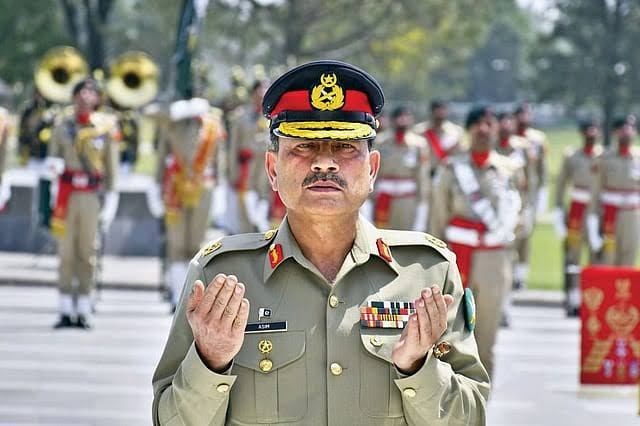
Syed Asim Munir Ahmed Shah is a Pakistani military officer who rose to national prominence through his work in military intelligence and his subsequent appointment as Pakistan’s army chief. He became Chief of Army Staff in November 2022 and was promoted to field marshal in May 2025 following the military confrontation between Pakistan and India. In December 2025, he was appointed Chief of Defence Forces while retaining his army command responsibilities.
Munir’s career has placed him at the centre of Pakistan’s defence policy, regional diplomacy and civil-military relations. His rise has attracted international attention because Pakistan’s armed forces have long exercised considerable influence over the country’s security decisions and political affairs.
His professional history includes leadership of the Inter-Services Intelligence agency, command of a major army corps and senior responsibilities at military headquarters. His tenure has also prompted debate about the relationship between military power and elected government in Pakistan.
Early Life and Family Background
Asim Munir was born in Pakistan in 1968, according to widely published biographical accounts. His exact date of birth is not consistently established in authoritative public records.
He came from a family with connections to education. His father, described in published profiles as a teacher, influenced accounts of Munir’s early family environment. Munir did not emerge from one of Pakistan’s most prominent military dynasties. Instead, he advanced through the army’s officer-training and command structure.
Details about his childhood, siblings and private family relationships remain limited. He has generally kept his personal life away from public attention, and information circulating online about his relatives is not always supported by reliable evidence.
Pakistan’s history provides important context for his career. Since independence in 1947, the country has experienced wars with India, internal security challenges, periods of military rule and recurring tensions between civilian leaders and the armed forces. These circumstances have made senior military appointments particularly consequential.
Education and Military Training
Munir entered the Pakistan Army through its officer-training system and completed the professional preparation required for commissioned service. His military education provided the foundation for a career involving leadership, operational planning and intelligence work.
He was trained through the Officers Training School in Mangla, rather than the traditional Pakistan Military Academy route followed by many officers. This distinction has featured in profiles examining his rise through the military hierarchy.
Military training combines practical leadership with instruction in discipline, command, strategy and the management of personnel. Officers also undertake additional professional courses and gain experience through successive appointments.
Munir’s later responsibilities indicate a career that extended beyond field command into intelligence assessment, organisational management and national security planning. Detailed claims about particular academic degrees or graduation dates should not be treated as confirmed unless supported by official records.
Beginning of His Military Career
After receiving his commission, Munir served in the Pakistan Army and progressed through different command and staff positions. His early service provided experience in military administration and operational leadership before he moved into intelligence work.
Advancement in the army depends on a combination of professional training, evaluations, leadership experience and appointment decisions. Munir’s progression eventually brought him into positions with direct responsibility for assessing security threats and advising senior military leadership.
His career became particularly significant when he was entrusted with leading military intelligence and subsequently Pakistan’s principal inter-services intelligence agency.
Leadership in Military Intelligence
Director-General of Military Intelligence
Munir served as Director-General of Military Intelligence before taking charge of the Inter-Services Intelligence agency. Military intelligence is responsible for assessing threats relevant to the armed forces, supporting operational planning and providing information to senior commanders.
The work is often confidential, making it difficult for the public to evaluate individual decisions or achievements in detail. Nevertheless, the position provided Munir with experience in intelligence coordination and security analysis.
Director-General of the ISI
In 2018, Munir became Director-General of Inter-Services Intelligence, commonly known as the ISI. The agency plays a major role in Pakistan’s national security and intelligence operations.
His tenure was short. He was replaced in 2019 during the government of Prime Minister Imran Khan. The circumstances surrounding the change later became part of the wider political history of relations between Khan and the military leadership.
Munir’s departure from the intelligence agency did not end his military career. He continued to receive senior appointments and eventually returned to the centre of national decision-making as army chief.
Command Positions and Senior Responsibilities
Following his intelligence service, Munir held important positions within the army’s command structure. He served as commander of the Gujranwala Corps, a major military formation, and later held the post of Quartermaster General at Army Headquarters.
Corps commanders oversee large formations and are responsible for readiness, personnel, planning and operational coordination. The Quartermaster General’s responsibilities involve logistical and administrative matters necessary to sustain military operations.
These appointments broadened Munir’s experience beyond intelligence. They gave him exposure to the practical demands of maintaining a large military organisation and coordinating resources across different units.
Appointment as Chief of Army Staff in 2022
In November 2022, Pakistan appointed Munir Chief of Army Staff, succeeding General Qamar Javed Bajwa. The position placed him at the head of one of the country’s most powerful institutions.
Pakistan’s army chief has substantial responsibility for military preparedness, command appointments, defence planning and national security. The office also carries political significance because the armed forces have intervened directly in national government at several points in the country’s history.
Munir took office during a period of political division and economic difficulty. Relations between the military and Imran Khan’s political movement became increasingly contentious, while Pakistan also faced security threats and difficult relations with neighbouring Afghanistan and India.
His appointment therefore came with responsibilities extending beyond routine military administration. Decisions made under his leadership would influence public confidence in the armed forces, relations with civilian politicians and Pakistan’s regional security posture.
Asim Munir and the 2025 Conflict with India

In May 2025, India and Pakistan entered a serious military confrontation following a deadly attack in Indian-administered Kashmir. India launched military operations against targets in Pakistan and Pakistan-administered territory, while Pakistan responded with its own military actions. A ceasefire was subsequently announced.
Munir was Pakistan’s army chief during the crisis. The two governments offered different accounts of the events and their military outcomes. India described its actions as a response to terrorism, while Pakistan presented its response as a defence of national sovereignty.
On 20 May 2025, Pakistan announced Munir’s promotion to field marshal. The formal ceremony took place on 22 May, when President Asif Ali Zardari and Prime Minister Shehbaz Sharif presented him with the field marshal’s baton.
The promotion was a major event in Pakistan’s military history because the rank is rarely awarded. Supporters credited Munir with leading the armed forces during the confrontation. Critics questioned the political significance of the decision and the extent to which the crisis strengthened the military’s domestic position.
The episode became a defining moment in his public career.
Appointment as Chief of Defence Forces
In December 2025, Munir became Pakistan’s first Chief of Defence Forces while continuing as Chief of Army Staff. The appointment followed changes to the country’s military command arrangements and was announced for a five-year period.
The Chief of Defence Forces role expanded his responsibilities across the country’s armed services. It represented a significant reorganisation of Pakistan’s senior military leadership.
The changes also prompted debate about the concentration of authority. Supporters argued that a unified command structure could improve coordination and national security. Critics raised concerns about the balance between military power, parliamentary oversight and civilian authority.
These questions are important to understanding Munir’s position. His influence is not limited to the conduct of military operations; it also affects how Pakistan organises and supervises its defence institutions.
Foreign Relations and Regional Diplomacy
Pakistan’s military leadership has traditionally played a prominent role in relations with India, China, Afghanistan, the United States and Gulf countries. Munir’s tenure has continued this pattern.
His public responsibilities have included engagement with foreign officials and participation in discussions involving regional security. Pakistan’s geographic position, nuclear status and relationships with major powers make its military leadership an important participant in regional diplomacy.
In 2026, Munir’s profile expanded further as Pakistan became involved in diplomatic efforts connected with tensions between the United States and Iran. These developments brought additional attention to the military’s role in foreign policy.
Supporters have described such engagement as an opportunity for Pakistan to strengthen its international standing. Others argue that diplomacy should remain firmly accountable to civilian government, particularly when decisions affect economic policy, regional commitments and national security.
Awards and Recognition
Munir received the Nishan-e-Imtiaz (Military), one of Pakistan’s prominent military honours. His promotion to field marshal in 2025 was another defining milestone.
The government associated his promotion with his leadership during the confrontation with India. The decision was widely reported and became a significant part of his public profile.
Official recognition demonstrates the standing he holds within Pakistan’s military establishment. However, assessments of his leadership remain divided, reflecting wider political disagreements over national security and the role of the armed forces.
Personal Life, Wife and Family
Munir maintains a private personal life. Public information about his wife, children and wider family is limited, and not every claim circulated on social media has been independently established.
He rarely makes his family the focus of public appearances. Most reliable reporting about him concentrates on his official responsibilities, military appointments and role in national affairs.
A careful biography should distinguish confirmed personal information from speculation. In Munir’s case, his military record is much better documented than the details of his home life.
Controversies and Criticism
Munir’s leadership has coincided with significant disputes over the military’s relationship with civilian politicians, particularly supporters of former prime minister Imran Khan.
Critics have accused the military establishment of exerting excessive influence over political competition and state institutions. Some opposition figures and analysts have also raised concerns about restrictions on political activity and the treatment of government critics.
The military has rejected accusations that it improperly controls civilian politics. Supporters of Munir argue that the armed forces have important responsibilities in protecting Pakistan against external threats and internal security challenges.
The debate is part of a longstanding issue in Pakistani public life: how to maintain an effective defence establishment while ensuring that elected institutions retain constitutional authority.
Munir’s expanded command responsibilities have made this question more prominent. His long-term reputation will depend partly on how these competing demands are managed.
Asim Munir’s Current Position in 2026
As of October 2026, Asim Munir serves as Pakistan’s Chief of Defence Forces and Chief of Army Staff. His responsibilities include military command, defence coordination and national security planning.
He remains a prominent figure in discussions involving Pakistan’s relations with neighbouring countries, international diplomacy and the distribution of authority between military and civilian institutions.
His future influence will depend on developments in regional security, domestic politics and the institutional arrangements governing Pakistan’s armed forces.
Legacy and Influence
Asim Munir’s rise from military intelligence to Pakistan’s highest military offices reflects both his career progression and the influential position of the armed forces in national life.
His supporters emphasise his leadership during the 2025 confrontation with India and his expanded role in military coordination. Critics focus on the concentration of authority and its implications for democratic accountability.
Both perspectives form part of the public debate surrounding his tenure. A balanced assessment of his legacy will require examining the results of his security decisions alongside their political and institutional consequences.
His place in Pakistan’s history will ultimately depend on how the country manages its security interests, international relationships and constitutional system during and after his leadership.
Frequently Asked Questions About Asim Munir
1. Who is Asim Munir?
Asim Munir is a Pakistani military officer who serves as Chief of Defence Forces and Chief of Army Staff. He became army chief in November 2022 and was promoted to field marshal in May 2025.
2. How old is Asim Munir?
Published biographical accounts commonly place his birth in 1968. He is approximately 57 or 58 years old in 2026, depending on his birthday. His exact date of birth is not consistently confirmed in authoritative public records.
3. Where was Asim Munir born?
He was born in Pakistan. Reliable public information identifying his exact birthplace is limited.
4. What is Asim Munir’s educational background?
He received professional military training through Pakistan’s officer-training system, including training at the Officers Training School in Mangla.
5. When did Asim Munir become army chief?
He became Chief of Army Staff in November 2022, succeeding General Qamar Javed Bajwa.
6. Why was Asim Munir promoted to field marshal?
Pakistan announced his promotion in May 2025 following the military confrontation with India. The government cited his leadership during the crisis.
7. What is Asim Munir’s current position?
As of October 2026, he serves as Pakistan’s Chief of Defence Forces and Chief of Army Staff.
8. Did Asim Munir lead Pakistan’s intelligence agency?
Yes. He served as Director-General of the Inter-Services Intelligence agency in 2018 and 2019.
9. Is Asim Munir married?
Public accounts describe him as married, but reliable information about his wife and children is limited.
10. Why is Asim Munir influential in Pakistan?
He holds the country’s highest military command responsibilities and plays a central role in defence and security policy. His position has also made him a major figure in debates about civil-military relations.
Conclusion
Asim Munir’s military career has taken him from intelligence leadership to the highest levels of Pakistan’s defence establishment. His appointment as army chief, promotion to field marshal and subsequent role as Chief of Defence Forces have made him one of the country’s most influential public figures.
His career combines military command, regional security responsibilities and involvement in a wider debate about the relationship between the armed forces and civilian government. How Pakistan manages those issues will be central to the historical assessment of his leadership.