Pete Edochie Biography
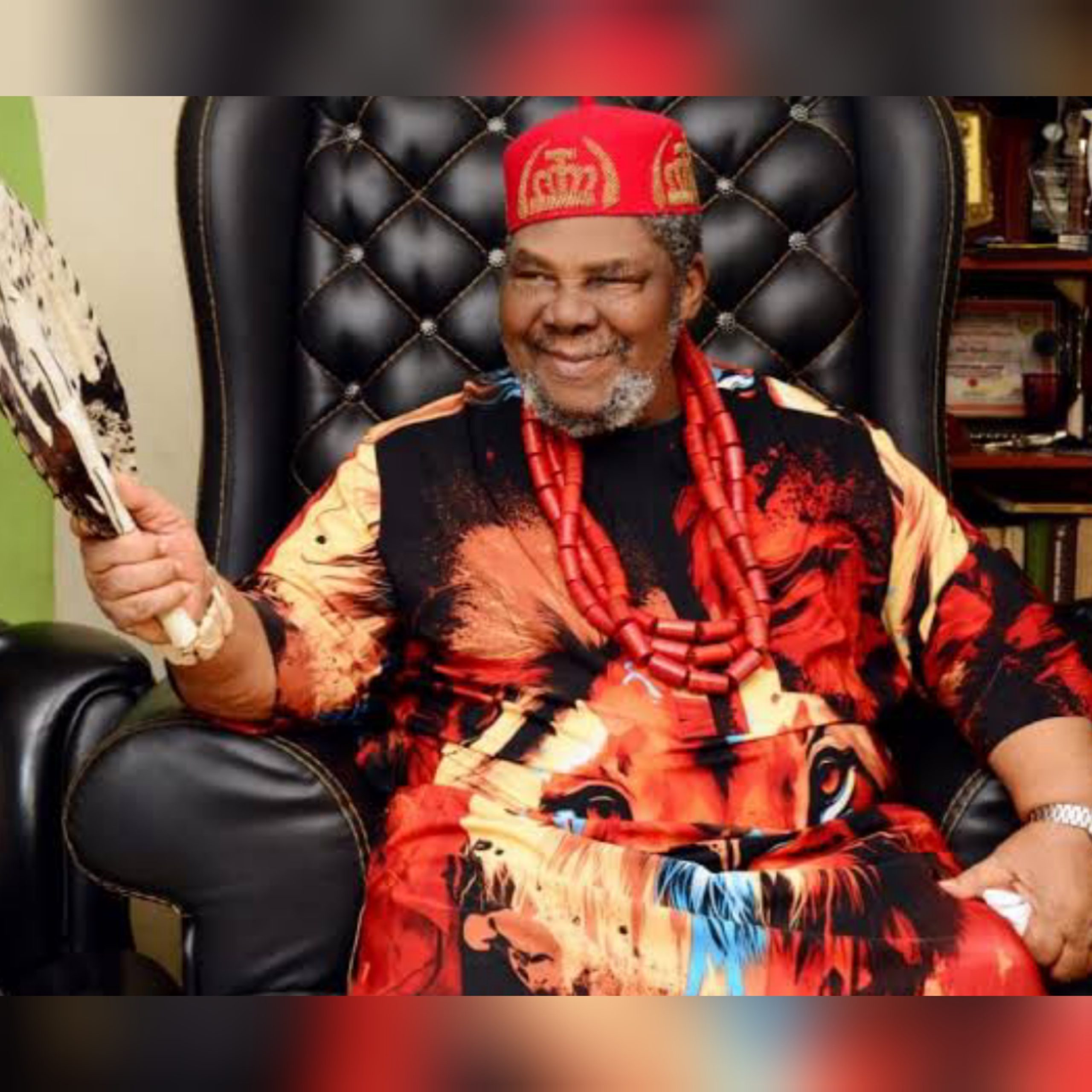
Chief Pete Edochie stands as one of Nollywood’s most enduring and respected figures, a performer whose deep voice and commanding presence have defined traditional authority on Nigerian screens for decades. From his breakthrough as Okonkwo to scores of roles as kings, patriarchs and community leaders, he has helped shape how African stories of strength, tradition and complexity reach audiences at home and abroad.
He was born on 7 March 1947. Sources place the birth in Zaria, Kaduna State, while he has spoken of his mother travelling from Makurdi to Enugu for the delivery. His roots lie firmly in Nteje, Oyi Local Government Area of Anambra State. His father worked with the railways, so the family moved through northern towns, giving the young Pete early exposure to different parts of the country. He attended St. Patrick’s and St. James Primary School in Zaria, then St. John’s College in Kaduna for secondary school. Later he studied journalism and television at the School of Journalism and Television in England and trained with the BBC.
Broadcasting came first. In 1967, at about twenty, he joined the Eastern Nigerian Broadcasting Corporation as a junior programmes assistant. Over the years he rose steadily, becoming Director of Programmes at Anambra Broadcasting Service and sometimes serving as Deputy Managing Director or Acting Managing Director. He helped launch ABS 3 FM Stereo, which he named Sunrise 96. When politics began to interfere with the station’s management, he chose to leave rather than remain under those conditions. By then he had already tasted acting success.
That success arrived with the Nigerian Television Authority’s adaptation of Chinua Achebe’s Things Fall Apart. In the 1980s production, later dated by many to 1987, he played Okonkwo. The role demanded pride, fear of weakness and a fierce attachment to tradition. Audiences and critics responded strongly. The BBC flew to Nigeria to interview him. Achebe himself later said the performance matched the character as he had imagined it, and until his death the writer would call him Okonkwo or Ebubedike. The series earned an international award and made the actor a household name across Africa long before the industry known today as Nollywood fully took shape.
When he stepped more fully into film in the 1990s, the foundation was already solid. He appeared in early titles and then became a constant presence in the growing video market. Producers sought him for roles that required gravitas: village chiefs, traditional rulers, stern fathers and men of influence. Films such as Rituals, Igodo, Billionaire’s Club and many others carried his name. Later he featured in Lionheart, the 2018 production directed by Genevieve Nnaji. Across more than two hundred credits he brought the same measured intensity and distinctive baritone that first marked him out. In 2005 the Actors Guild of Nigeria briefly restricted several leading performers, including him, over fee disputes, yet his standing only grew.
Recognition followed the body of work. In 2003 President Olusegun Obasanjo conferred on him the national honour of Member of the Order of the Niger. He received a Lifetime Achievement Award from the Africa Film Academy and the Industry Merit Award from Africa Magic. Other honours include Movie Personality of the Year from City People Magazine and various lifetime and special recognition awards that acknowledge both his craft and his contribution to the industry’s growth.
Away from the set he has kept a steady private life. He married Josephine Edochie in the late 1960s when he was twenty two. The couple have six children. Among them are actors Linc Edochie and Yul Edochie, who have built their own careers while the family remains closely associated with the industry. In 2009 he was kidnapped near Onitsha and released unharmed after a short period in captivity. He later spoke calmly about the experience, noting that his captors treated him with respect. A practising Catholic, he has also appeared in public campaigns, including one supporting greater use of Wikipedia among older Nigerians.
What stays with viewers is the consistency. Whether as the tragic Okonkwo or as a modern day Igwe, he has carried stories with dignity and clarity. Younger actors still look to the standard he set. Nollywood has changed in style, scale and reach, yet the voice and presence that announced him in the 1980s continue to command attention. That kind of longevity does not happen by accident. It comes from craft, principle and a deep understanding of the characters he chooses to play.
Quick Facts
Real name: Chief Pete Edochie (Pete Uwadiegwu Ogugua Edochie)
Date of birth: 7 March 1947
State of origin: Anambra
Occupation: Actor
Years active: 1980 to present